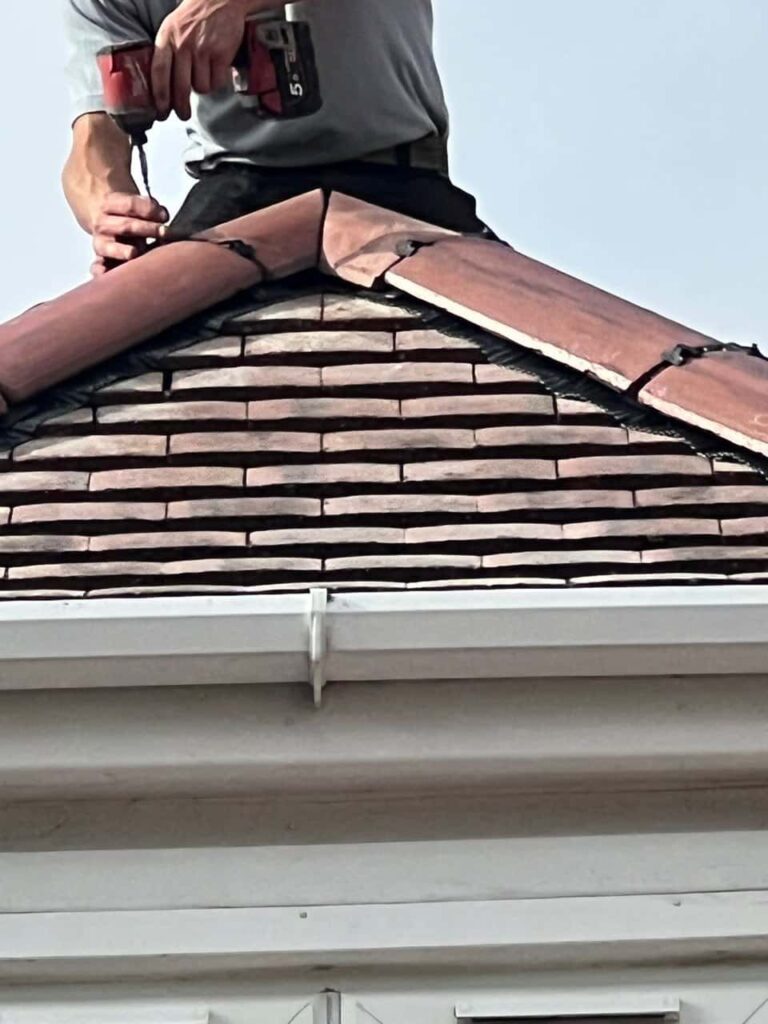
Strong winds can place considerable pressure on a roof, particularly on exposed edges, ridge areas, tiles and other components that rely on secure fixings to remain weather-resistant. While significant damage may be immediately obvious, wind can also create smaller defects that are much easier to overlook.
For homeowners in Warlingham, Surrey, checking for signs of roof damage after particularly strong winds can help identify problems before further exposure to rain and changing weather conditions causes them to worsen.
At Warlingham Roofing Repairs, we recommend paying attention to both external and internal warning signs. You do not need to climb onto the roof yourself; many useful observations can be made safely from ground level or from inside the property.
Why Can Strong Winds Damage a Roof?
A roof is designed to withstand normal weather conditions, but strong gusts can create considerable uplift and pressure.
Wind does not always affect every part of a roof equally. Certain sections may experience greater forces because of their position, shape or exposure.
Roof components that are already slightly loose, worn or deteriorated can be particularly vulnerable. Strong winds may turn an existing weakness into a more noticeable defect.
Potential consequences include:
- Slipped or displaced tiles
- Broken roofing materials
- Damage around roof edges
- Disturbed ridge tiles
- Problems with flashing
- Loosened components
- New openings through which water can enter
This is why a roof can develop problems after strong winds even if there was no obvious damage beforehand.
Check for Missing or Slipped Roof Tiles
One of the most recognisable signs of wind damage is a missing tile.
However, tiles do not always disappear completely from the roof. Some may move only slightly from their original position.
From ground level, look for:
- Visible gaps in the roof covering
- Tiles sitting at unusual angles
- Sections that appear uneven
- Tiles that have moved out of alignment
- Broken or cracked-looking roofing materials
Even a relatively small displacement can compromise the way neighbouring tiles overlap and protect the roof.
Look Around the Property for Fallen Roofing Material
Sometimes the easiest evidence of roof damage is found on the ground rather than on the roof itself.
After strong winds, check the garden and accessible areas around the property for fragments of tile, slate, mortar or other roofing material.
Finding debris does not necessarily reveal exactly where the damage has occurred, but it is a strong reason to arrange a closer professional inspection.
Avoid assuming that a small fragment means the problem itself is insignificant. The roof should be checked to determine where the material came from and whether surrounding components remain secure.
Pay Particular Attention to Ridge Areas
The ridge runs along one of the most exposed sections of many pitched roofs.
Because ridge components sit prominently at the top of the roof, strong winds can place considerable pressure on them.
From a safe position at ground level, look for obvious changes in alignment or gaps that were not previously visible.
Loose or displaced ridge components should receive professional attention because continued exposure may allow deterioration to progress.
Check Roof Edges and Verges
Roof edges are another area that can be particularly exposed to wind.
Strong gusts can affect tiles and associated materials along these sections, especially where existing deterioration is already present.
Look for obvious movement, missing materials or changes in the appearance of the roof edge.
Problems in these locations may not immediately cause an internal leak, but they can leave parts of the roof more vulnerable to subsequent weather.
Look for Changes Around Flashing
Flashing is used around vulnerable roof junctions and penetrations to help prevent water ingress.
Strong weather can sometimes expose existing weaknesses or contribute to movement around these details.
You may not be able to assess flashing fully from ground level, but visible lifting, displacement or unusual gaps should not be ignored.
Because these areas play an important role in keeping water out, suspected damage is best assessed professionally.
Inspect the Loft for Signs of Water Ingress
Not every roof problem can be identified externally.
If it is safe and straightforward to access your loft, checking the interior can sometimes reveal signs that the roof covering has been compromised.
Look for changes such as:
- New damp patches
- Water staining
- Moisture on timbers
- Damp insulation
- Signs of dripping
- Unusual daylight through the roof covering
Bear in mind that water can travel after entering the roofing system. The location of an internal damp patch does not necessarily sit directly beneath the external defect.
A professional roofer may therefore need to investigate both the symptom and the surrounding roof area.
Check Ceilings and Upper Walls
Water ingress does not always become obvious immediately after strong winds.
If displaced roofing materials are followed by rainfall, moisture may gradually become visible inside the property.
Pay attention to ceilings and upper sections of walls for:
- New discolouration
- Damp patches
- Peeling finishes
- Unexplained moisture marks
If these signs appear after severe weather, the roof should be considered as a possible source.
Prompt investigation can help identify the defect before continued water entry affects a larger area.
Do Not Forget Flat Roof Areas
If your property includes a flat roof section, this should also be considered after strong winds.
Wind can affect edges, junctions and the roof covering itself. Debris may also accumulate on the surface and interfere with normal drainage.
Because much of a flat roof may not be visible from the ground, avoid climbing onto it simply to investigate.
If you suspect that something has changed following severe weather, a professional inspection provides a safer and more thorough approach.
Check Gutters from Ground Level
Strong winds can carry leaves, twigs and other debris onto the roof, some of which may eventually enter gutters.
Where safely visible, check whether gutters appear:
- Blocked with storm debris
- Displaced
- Sagging
- Detached from their usual position
Gutters are separate from the primary roof covering, but their condition still contributes to effective rainwater management around the property.
Any obvious storm-related movement is worth addressing.
Watch for Problems That Appear During the Next Rainfall
Some wind damage only becomes apparent when rain follows.
A tile may have moved just enough to create a vulnerable area without leaving a dramatic visible gap.
After strong winds, pay additional attention during subsequent wet weather.
New leaks, damp patches or water staining can indicate that the roof’s weather-resistant covering has been compromised.
The sooner the source is identified, the easier it is to prevent repeated exposure.
Why Several Slipped Tiles May Indicate More Than an Isolated Problem
One displaced tile can sometimes be a straightforward localised defect.
Several tiles moving within the same period deserve closer investigation.
Repeated or widespread movement may indicate that parts of the roof covering or supporting components are no longer as secure as they should be.
A professional assessment can establish whether the problem is limited to the affected tiles or whether a wider section needs attention.
This is particularly important when the roof has experienced previous problems.
Older Repairs Should Be Checked After Severe Weather
If your roof has previously been repaired, strong winds can provide a useful reason to monitor those areas.
A sound professional repair should be designed to perform reliably, but surrounding older roofing materials may continue to deteriorate independently.
If a problem appears near a previously repaired section, it does not necessarily mean the earlier work has failed.
The new defect could involve neighbouring materials or a completely separate part of the roofing system.
Professional inspection can identify the actual source rather than relying on assumptions.
Do Not Climb onto the Roof Yourself
Checking your roof after strong winds does not mean physically walking across it.
Roof access carries obvious risks, particularly after severe weather when materials may be loose, wet or unstable.
Walking on roofing materials can also cause additional damage.
Homeowners can make useful observations by:
- Looking from ground level
- Checking accessible windows
- Inspecting internal ceilings
- Checking the loft where safely accessible
- Looking for fallen materials around the property
Anything requiring direct roof access should be left to experienced roofing professionals with appropriate equipment.
What If You Cannot See Any Damage?
A lack of obvious visible damage is reassuring, but it does not always confirm that every component remains unaffected.
Small movements can be difficult to identify from ground level.
If strong winds were particularly severe or you notice any subsequent changes inside the property, arranging an inspection can provide a clearer understanding of the roof’s condition.
This can be particularly worthwhile if the roof already had areas of concern before the bad weather.
When Should You Arrange Professional Roof Repairs?
It is sensible to seek professional attention if you notice:
- Missing tiles
- Several slipped or displaced tiles
- Roofing debris around the property
- Changes to ridge areas
- Visible roof edge damage
- Suspected flashing problems
- New internal dampness
- Water entering the loft
- Gutters or associated components becoming displaced
- A previous roofing problem returning after strong winds
The presence of damage does not automatically mean extensive work is necessary.
Where defects are localised and the surrounding roof remains in good condition, targeted repairs may be sufficient.
Why Early Repairs Can Make a Significant Difference
A small opening in the roof covering can become more problematic when repeatedly exposed to wind and rain.
For example, one displaced tile may leave neighbouring components more exposed. Water entering through a relatively small defect can also travel beneath the visible covering before appearing inside the property.
Early repair aims to restore the affected section before the problem has an opportunity to develop further.
This is why investigating storm-related changes promptly is generally more effective than waiting for an obvious leak.
What Will a Professional Roofer Look For?
A professional roof inspection goes beyond identifying the most visible damaged tile.
Depending on the roof and the nature of the problem, relevant areas may include:
Roof coverings
Tiles or slates can be checked for displacement, breakage and other visible deterioration.
Ridge details
Exposed ridge areas can be assessed for movement and security.
Flashing and junctions
These vulnerable points can be checked for defects that could allow water ingress.
Roof edges
Perimeters and other exposed sections can be examined for storm-related movement.
Surrounding components
The area around an obvious defect should also be considered to establish whether damage extends beyond a single component.
This broader assessment helps ensure that repairs address the actual extent of the problem.
Professional Repairs Should Address the Cause
After strong winds, it can be tempting to focus entirely on whatever damage is easiest to see.
However, replacing one visibly displaced tile is only an effective solution if the surrounding roof remains secure.
At Warlingham Roofing Repairs, professional assessment allows the affected section and relevant surrounding components to be considered before repairs are recommended.
The objective is to restore reliable roof performance rather than simply improve the appearance of the damaged area.
Conclusion
After strong winds, it is worth checking your roof for missing or slipped tiles, displaced ridge materials, changes around roof edges, fallen roofing debris and signs of water ingress inside the property. Gutters and other visible components should also be observed for storm-related movement or blockage.
These checks should always be made from a safe position. There is no need to climb onto the roof yourself, particularly when strong weather may have left roofing materials loose or unstable.
If you notice signs of wind damage at your property in Warlingham, Surrey, Warlingham Roofing Repairs can assess the roof, identify the extent of the problem and carry out appropriate repairs where required. Contact our team if you are concerned about your roof following strong winds and would like its condition professionally checked.
Call us on: 01883 779 994
Click here to find out more about Warlingham Roofing Repairs
Click here to complete our contact form and see how we can help with your roofing needs.